














Big hotels have departments for this. Independent hotels have you.
Share this post

Most hotel software says it helps hoteliers move faster.
That is nice. Useful, even. But speed is not the whole story.
If your team still has to raise a ticket, wait for a reply, or ask someone else to make a change that should be simple, then the software is not really giving you control. It is just letting you move quickly through someone else’s process.
And in hospitality, that gets old fast.
Independent hotels do not run on patience. They run on timing. Guests arrive when they arrive, rates change when demand changes, teams hand over between shifts, and plans shift before lunch. A good hotel PMS should keep up without making everyone ask for permission.
At bigger hotel groups, there are usually people whose entire job is to manage this. Finance teams handle billing, IT teams manage user access, and revenue managers handle pricing. Whole departments quietly absorb the small operational friction the software creates. Independent hotels do not have that. They have you, and the guest at reception, and the housekeeping team wondering why the room status has not updated.
Self-service is not a nice-to-have for hoteliers. It is oxygen: hotel operators managing their own software and tools, not guest self-check-in.
The old model was built around waiting
Plenty of PMS platforms still behave like they were designed for a support queue first and a hotel team second.
Need to change your plan? Raise a ticket. Want to test an upgrade? Talk to someone. Need to adjust your setup? Wait for a response. Want to compare rates with the market? Ask for it. Need to update a website or booking flow? Hope someone has time.
That model works fine when you have a large admin team and a generous amount of patience. Most independent hotels have neither. What they have is a general manager who needs to make ten small decisions before lunch, a front desk team already dealing with an unhappy guest in Room 214, and a booking calendar that does not care how the ticket queue is looking today.
“Later” in hospitality is usually a polite way of saying “after breakfast, after check-in, after the rush, and after you have already solved it another way.”
So the software either helps in the moment, or it does not help at all.

What self-service actually looks like
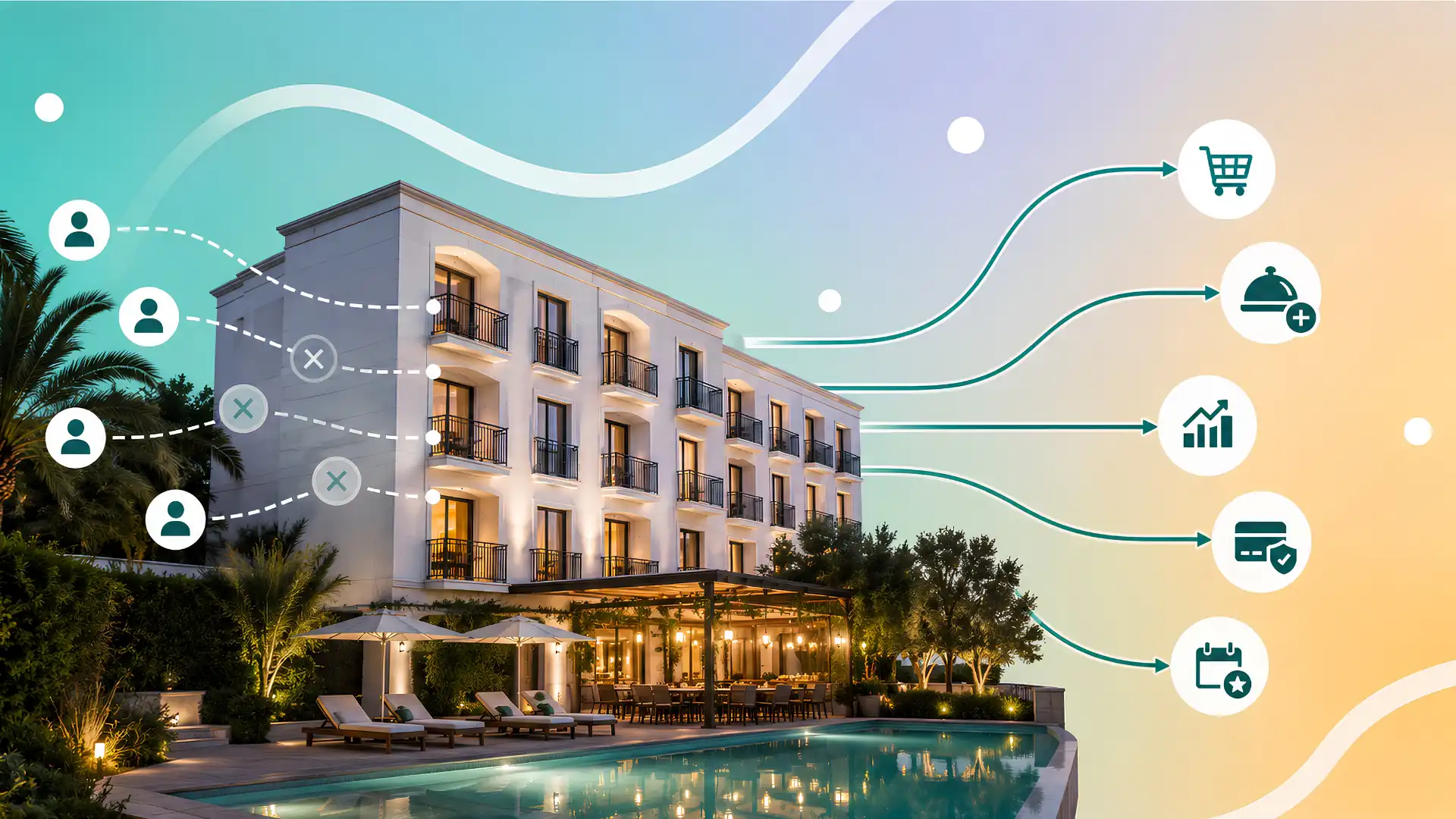
Self-service is not one feature. It is a mindset that runs through the product. In practice, that means things like:
- Managing invoices and billing history
- Changing user access and permissions
- Updating property settings
- Changing your subscription plan
- Building your own pricing rules and compsets
- Building your own website
Take subscription management. In the past, changing a plan or trying an upgrade meant a call, an email chain, and a wait. In the latest RoomRaccoon release, all of that moved inside the platform: change your plan directly, update your billing details in a few clicks, and try selected upgrades free for 30 days without a sales conversation. Not because it is trendier. Because a general manager working out whether a monthly plan makes more sense should not have to draft a support email to find out.

Or take pricing. Revenue decisions are better when they are backed by real market context, not instinct and a hunch from Tuesday afternoon. RaccoonRev now lets hoteliers build their own competitive set straight from Booking.com, see nearby hotel rates in context, and preview smarter pricing recommendations on their own account. No setup call, no waiting for a specialist to configure it for them. Just the market view they should have had all along.
The same logic runs through RaccoonSite, where your website is something you can actively shape rather than wait around to change. Small updates should not need handovers. Bigger changes should not need a project plan.
None of these are dramatic on their own. Together, they add up to something quietly powerful: a hotelier who spends less time asking, and more time doing.
The real cost of not having self-service
There is a common assumption that self-service is only about convenience. Faster changes, fewer support tickets, less admin. All true.
But the bigger cost of not having it is not time. It is hesitation.
When every small change requires someone else, hoteliers start deferring the small changes. A pricing tweak that could have been made on Tuesday waits until next week. A subscription decision that could have been resolved in ten minutes gets pushed down the list. A compset update that could have sharpened last month’s rate strategy quietly stays on the backlog.
Individually, none of these moments matter. Together, they add up to a hotel running on a slight delay in every direction at once. And a hotel running on delay is a hotel leaving money and momentum on the table. According to HotelTechReport’s 2026 PMS Impact Study, 89% of hoteliers save between 2 and 10 hours per week thanks to PMS automation, with 17% saving over 500 hours a year. Which suggests the difference between a PMS that helps and one that gets in the way is not small. It is measured in staff weeks.
of hoteliers save 2 to 10 hours a week with PMS automation
save over 500 hours a year
Good self-service tools do not just save time. They remove the small hesitations that add up to a slower business.
Better tools create better decisions
There is another benefit to giving hoteliers more control that often gets overlooked. When a team can manage more of the product themselves, they tend to understand it better. They know where things live, what changed, and they know how to adjust when something shifts.
That creates confidence, and confidence is one of the most underrated operational advantages in hospitality.
A team that trusts its tools makes faster decisions. A team that makes faster decisions catches revenue opportunities the slower version misses. A team that catches revenue opportunities has a better month. And a better month, repeated a few times, is what actually separates a well-run independent hotel from one that is quietly falling behind.
Self-service is not just about the mechanics of doing something yourself. It is about the muscle memory that comes from being trusted to run your own business.
The point is control, not complexity
The best self-service tools do not make a product harder to use. They make it easier to trust. That is the standard RoomRaccoon is aiming for. Manage your subscription directly in the platform, try selected upgrades free for 30 days, build your own compset in RaccoonRev, shape your website in RaccoonSite, and so much more. And on the rare occasion you need a hand, Rocco is right there in the app, ready to walk you through it. Keep the work inside the product, where it belongs.
Hotels do not need more software that looks clever in a demo and slows down in real life.
They need software that gets out of the way.
They need a hotel PMS built for the people who actually run the hotel. And when that happens, everything feels a little less like waiting, and a little more like running the business on your own terms.
Follow us


remydevilliers
Subscribe to our newsletter for more on the latest hospitality & RoomRaccoon updates delivered straight to your inbox!


