










Property Management System: Your 2025 PMS System Hotel Guide
- March 4, 2025
- Nicky. M

A Property Management System (PMS) is no longer just a convenience—it’s a necessity. And with 78% of hotels upping their IT budgets, there’s a good chance your competitors are already upgrading. Why? Because keeping up with rising guest expectations, smaller teams, and the need for faster operations is nearly impossible without the right technology.
This guide will cover everything you need to know about choosing the best PMS for your property in 2025. From essential features to emerging trends, we’ll help you make an informed decision that boosts efficiency, enhances the guest experience, and maximises revenue. So, grab your coffee, mute that front desk phone, and let’s get started.
What is a property management system?
How does a hotel property management system work?
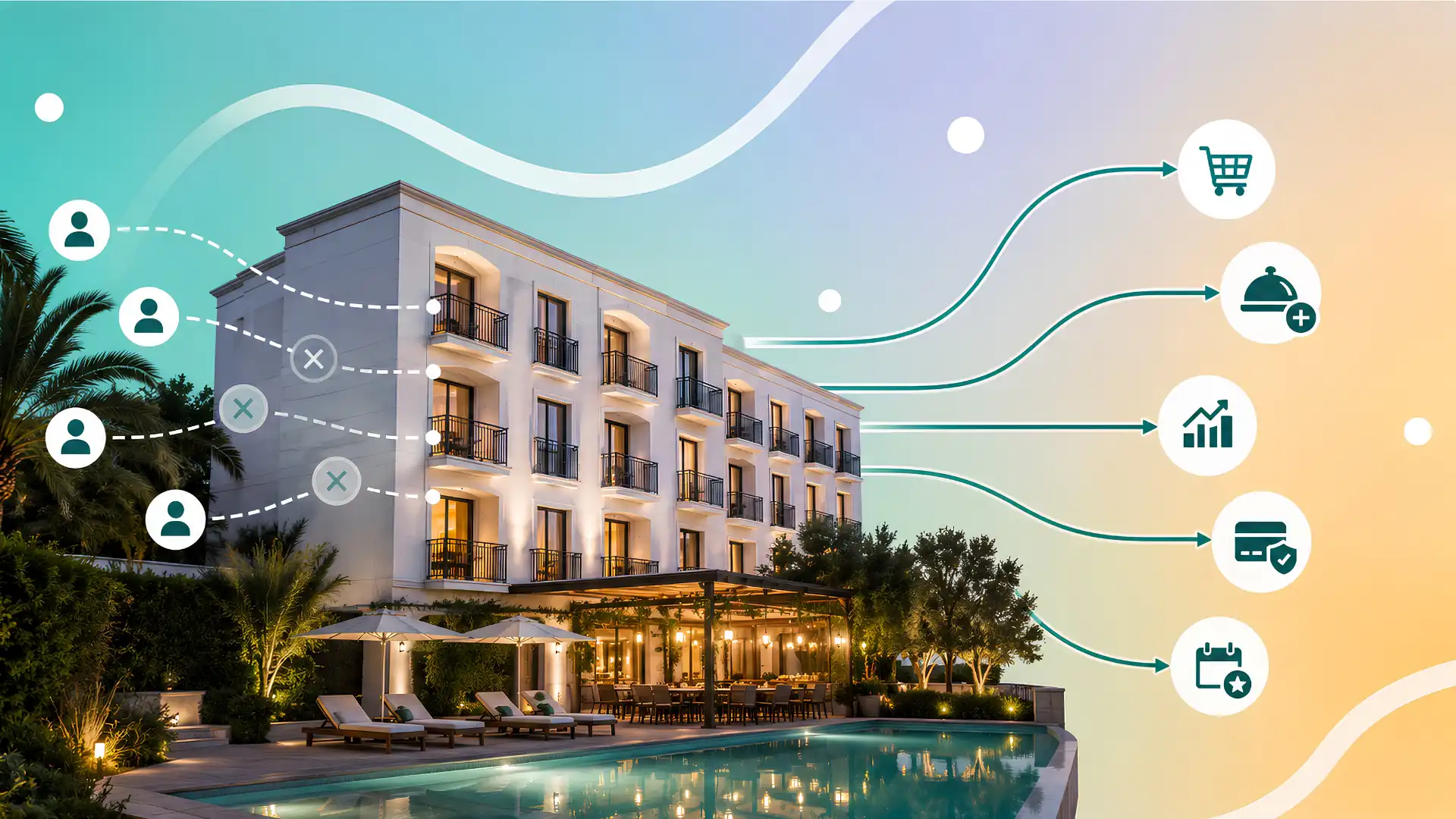
A hotel property management system automates daily tasks, stores essential data, and connects different departments, ensuring that everything from reservations to housekeeping updates happens in real-time.
Just like your brain automatically coordinates walking, talking, and breathing at the same time, a hotel PMS automates bookings, invoicing, check-ins, housekeeping, payments, and guest communication—so you can focus on your guests instead of juggling a million tasks manually.
Key characteristics of hotel property management systems
- Cloud-based – Hotel management software is accessible from any device (Windows, Mac, Linux, Android, iOS), allowing hotel staff to manage operations from anywhere.
- User-friendly interface – Intuitive design makes it easy for staff to learn and use, reducing training time and improving productivity.
- Automation & efficiency – Automates key tasks like reservation assignments, housekeeping updates, and invoicing to save time and minimise errors.
- Integration capabilities – Connects seamlessly with essential tools like the property management system (PMS), channel managers, accounting software, booking engines, POS systems, and revenue management platforms to create a unified hotel tech ecosystem.
- Real-time data & reporting – Provides instant insights into occupancy, revenue, and guest trends, supporting data-driven decisions that boost performance and profitability.
- Scalability – Grows with your business by allowing you to add optional tools and upgrades as needed, whether you’re managing a small B&B or a multi-property hotel.
- Multi-property management – Allows hotel groups or chains to oversee multiple properties from a single, centralised dashboard.
- Secure payment processing – Ensures safe, PCI-compliant transactions through integrated payment gateways and tokenised data handling.
- Guest experience tools – Includes valuable features such as online check-in, upselling opportunities, and automated guest communication to enhance satisfaction and encourage repeat bookings.
Main modules and features of hotel property management software
Modern cloud-based PMS software brings together multiple functions into one system, but the exact features vary by provider. Some offer a fully integrated solution, while others sell separate modules that hotels can add to their existing setup. Here’s a look at the core structure of a hotel PMS.
1. Reservations & booking management
A hotel reservation calendar stores all room inventory and booking dates, making it easily accessible for front desk staff. To ensure smooth operations, the reservation system should integrate with the website booking engine and all distribution channels, like OTAs. For multi-property hotels, the system should allow seamless switching between accounts and reservation calendars, enabling centralised management from a single platform.
Key functions of the reservation module include:
Room bookings: Room bookings are managed seamlessly within the system, which tracks room availability and status in real time. With an integrated channel manager, availability is automatically updated across all distribution channels to prevent double bookings. As new reservations come in, the system instantly reflects changes, ensuring accurate occupancy monitoring. The reservation calendar also displays current and upcoming bookings for easy planning. Many property management systems support group reservations and even limited non-room bookings to sell alternative hotel spaces for conferences or events, making them a versatile solution for all types of hospitality needs.
Booker profiles: Guest details, whether for corporate or leisure travellers, are stored in dedicated booker profiles within the system. These profiles include essential information such as contact details, booking history, preferences, payment methods, and special requests. This allows hotels to deliver a personalised experience, streamline repeat bookings, and speed up check-ins. For corporate guests, profiles can also store company details, negotiated rates, and billing preferences, simplifying folios and account management. Having all this data readily available ensures smoother operations and enhances the overall guest experience.
2. Front desk & online check-in/out
Online check-in/check-out: Modern hotel management software allows guests to check in via a digital registration form at the front desk or opt for online check-in and check-out for a seamless, contactless experience. This feature also helps hotels streamline payments with payment request links and boost revenue by offering upsells such as room upgrades and pre-arrival services.
Flexible invoice management: A hotel property management system (PMS) with flexible invoice management makes billing easier for both hotels and guests. It allows you to split invoices by items or partial payments, ensuring a smooth, stress-free experience. For example, a business traveller may need an invoice for their room while their company covers extras like meals or parking. Corporate groups can also pay partially upfront and settle the balance at check-out.
You can also add multiple payments to a single invoice, whether it’s a pre-payment, on-site payment, or final balance at check-out. Plus, the system automatically matches invoices, so there’s no need for manual reconciliation after hours. In addition, you can easily assign invoices to the correct payer, whether it’s the guest, a company, or a travel agent. With integrated POS connectivity, extra charges—like restaurant bills or spa treatments—are automatically added to the guest’s folio, ensuring centralised billing and a smooth check-out process.
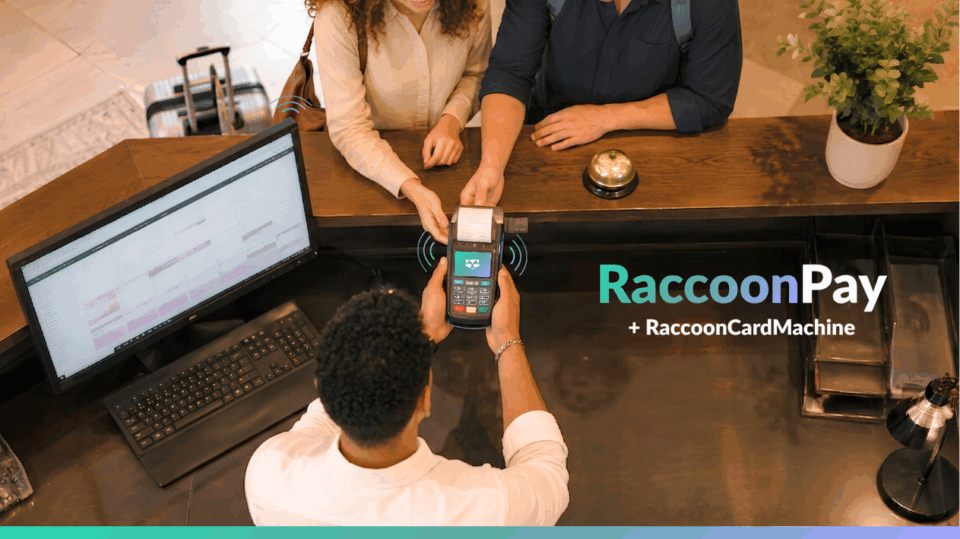
Payment processing: For the best experience, choose a hotel PMS with an integrated payment gateway that processes online transactions and centralises all payments in one dashboard. This minimises time spent on reconciliations, chasing invoices, and correcting manual errors, while ensuring a fast, secure check-out process. In addition, with an integrated channel manager, virtual credit cards (VCCs) from OTAs are automatically imported into the PMS for easy, secure charging.
Dive into our ultimate guide to hotel payment processing!
3. Guest communication & experience
Guest communication: A hotel property management system (PMS) with automated email notifications keeps guests informed from booking to check-out—and beyond. Instant confirmation emails reassure them their reservation is secured, while pre-stay emails can include check-in details, itineraries, or online check-in links. After their stay, a follow-up email can thank them, request a review, or offer a discount for a future booking. Best of all, these emails can be automated, fully branded, and personalised with guest data for a seamless experience.
Upsells and packages: Bundled rates and add-ons aren’t just great for attracting more bookings—they’re a smart way to increase revenue too. With a modern hotel management system, you can easily create custom packages that combine room rates with perks like breakfast, spa treatments, or local experiences. Guests booking directly can also add extras such as champagne, a picnic basket, or partner-led tours. It’s a win-win: guests enjoy a memorable stay, and your hotel boosts its bottom line.
4. Rate management
A property management system with an integrated channel manager simplifies rate management across multiple sales channels.
Here are a few key features to look out for:
- Multiple rate plans and packages: You can create different pricing structures, such as non-refundable rates, bundled packages, early bird discounts, and corporate rates.
- Channel-specific pricing: You can set different rates for OTAs, direct bookings, and corporate clients to maintain competitive pricing.
- Parent rates: Some PMS software offers flexible configuration, allowing you to sell your property as individual rooms or as an entire unit. For example, a guesthouse with 10 rooms can be set up so guests can either book a single room or reserve the entire property for exclusive use.
- Automated restrictions: Implement minimum stay requirements, child surcharges, or close-out dates during peak periods.
- Bulk or single rate updates: With one click, adjust seasonal pricing or update individual rates across all channels in real-time—no delays.
- Dynamic pricing: Auto-adjust room rates in real-time based on demand, seasonality, and local events.
5. Revenue management
Smart pricing used to be something only fancy Revenue Management Systems (RMS) could do. But these days, modern PMS software offers built-in features, making smart pricing accessible to independent hotels.
Dynamic or demand-based pricing: Enables hotels to automatically adjust rates based on factors like occupancy, days before arrival, and room-demand trends. Hotels can also set stop-sell rules for non-refundable rates, ensuring maximum revenue optimisation with minimal manual intervention.
CompSet dashboard or Rate Shopper: Lets you benchmark your rates against competitors and automatically adjust prices based on their activity, ensuring you stay competitive and attract more bookings than the competition.
AI pricing recommendations: In the era of AI-driven solutions, it should come as no surprise that leading property management systems now include AI-powered pricing recommendations. In fact, if your current PMS doesn’t offer this feature, it may be falling behind industry standards.
6. Housekeeping & maintenance coordination
Housekeeping is an essential back-of-house operation and a highly routine-driven task, making it a must-have feature in any property management system (PMS) or hospitality management software. However, not all PMS platforms handle housekeeping the same way. Some offer basic task tracking, while more advanced systems provide real-time room status updates and mobile accessibility for housekeeping staff—making daily operations smoother and more efficient.
For example, when a guest checks out, the front desk team updates the room status and assigns the cleaning task to an available housekeeper. The housekeeper receives a notification on their mobile device and proceeds with cleaning. Once finished, they update the room status from their phone, notifying the front desk that the room is ready for the next guest. This seamless communication speeds up room turnover and enhances operational efficiency.
7. Event management
More hoteliers are exploring non-room revenue opportunities by making better use of their spaces. Metrics like RevPAM (Revenue Per Available Metre) are becoming standard, especially in properties that host meetings, weddings, and workshops.
To meet this shift, PMS providers are adapting. Event management tools are no longer separate systems — they’re being integrated directly into hotel operations.
Key features include:
- Event function sheets to centralise event logistics
- Grey rooms for managing non-bedroom spaces like conference halls
- Room allotments to streamline group bookings
- Virtual wallets for handling large deposits efficiently
For hybrid hoteliers managing both rooms and events, these tools support smoother coordination and better revenue tracking — all in one system.
8. Reporting
Property managers rely on data to track operations and measure performance. A hotel PMS acts as a business intelligence tool, collecting key hotel data and generating automated reports. Depending on the system, it can provide insights through revenue reports, end-of-day summaries, room and tax reports, booking channel analysis, reservation trends, and housekeeping reports.
9. Channel management
Most hotel managers ask if they can get a channel manager in one solution for good reason. This important tool is a headache managed separately, but as part of your PMS —such as RoomRaccoon— you can manage your rates and availability from a single platform, let guests book directly through your website, and simultaneously synchronise your channels such as Booking.com, Expedia, or Airbnb.
Speaking of channel management software, RoomRaccoon won the world's best channel manager in 2024.
10. Direct bookings
Direct bookings are a key part of any hotel's distribution strategy and profitability—especially as more travellers prefer to book directly with properties. That’s why an integrated booking engine isn’t just nice to have—it’s essential.
Seamlessly connecting to your hotel’s website, a great booking engine should be mobile-friendly, support secure online payments, and go beyond the basics. Think: offering add-ons, promoting special packages, and making group bookings a breeze.
11. Integrations Hub
An all-in-one PMS simplifies your tech stack by incorporating complementary tools, but even the most advanced system can’t do everything—kind of like a smartphone. Your phone comes with built-in essentials like a camera, clock, and calculator, but you still download extra apps to customise it to your needs. The same goes for a PMS with an integrations hub or marketplace, letting you easily connect the tools you need or already use—whether it’s accounting software, POS system, or digital door locks—without the hassle of a complicated setup.

Norfolk Passport enhances efficiency with intuitive multi-property PMS.
Norfolk Passport is a distinctive hospitality group spanning six unique properties. While previously using a cloud-based PMS, the team found it lacked the flexibility and ease needed to match their dynamic operations and growing team.
Founder Craig Davis sought a solution that could support innovation, streamline workflows, and be intuitive for nearly 200 daily users.
RoomRaccoon’s UX-led design and multi-property features stood out from the rest. Since adopting RoomRaccoon, staff engagement has improved and guest experiences have elevated, thanks to a system that truly supports both people and performance.
Best hotel property management systems for small hotels
For small hotels, finding the right PMS often means balancing affordability, ease of use, and essential features. While every small hotel operates differently, an all-in-one PMS is a great choice to cover key operations without being tied down by multiple supplier contracts, which adds up quickly.
Must-have PMS features for small hotels
- Cloud-based access – Manage bookings and operations from anywhere.
- Integrated booking engine – Drive direct reservations and reduce OTA commissions.
- Channel manager – Sync availability across OTAs to prevent overbookings.
- Automated guest communication – Send pre-arrival, check-in, and post-stay emails.
- Flexible invoice management – Easily handle split bills, multiple payments, and incidental charge
Best hotel property management systems for medium hotels
For medium-sized hotels, a PMS should be the ultimate time-saver—handling everything from reservations to payments while keeping operations running like clockwork. With more rooms and higher guest turnover than small properties, medium hotels need a system that connects departments effortlessly.
Best PMS features for medium hotels
- Multi-department automation – Sync front desk, housekeeping, and maintenance.
- Group booking capabilities – Manage corporate events and group reservations easily.
- Advanced reporting & analytics – Gain insights into revenue, occupancy, and booking trends.
- Integrated payments – Process transactions securely and reduce manual reconciliation.
- Revenue management tools – Automatically adjust pricing based on demand.
Best hotel management software for large hotels
With hundreds (or even thousands) of rooms, multiple departments, and intricate booking flows, a basic system won’t suffice. An enterprise-grade PMS must support multi-property management, automate complex workflows, and integrate seamlessly with other critical hotel systems—ensuring consistency, efficiency, and an exceptional guest experience across every location.
Best hotel management software features for large hotels
Scalability, customisation, and data-driven decision-making are key. A top-tier PMS for big hotels should include:
- Multi-property dashboard – Manage several locations from one system.
- Guest profile & CRM integration Personalise guest experiences with detailed history tracking.
- Customisable workflows & automation – Adapt the system to operational needs.
- Enterprise-grade API connectivity – Ensure seamless integration with revenue management systems, CRM platforms, GDS networks, smart room controls, and other critical third-party software.
How to choose PMS software for independent properties
Here are eight things to consider before choosing a hotel management software for your independent lodging business:
1. Consider the pricing model
Start by evaluating how the PMS provider’s pricing structure aligns with your hotel’s needs and budget. Here are key questions to ask:
- What’s included in the base price? Are there any hidden fees for essential features?
- Does the provider charge commission per booking? If so, how does it impact your overall profitability?
- Are there extra fees for connecting to booking channels (OTAs, GDS, metasearch)?
- Is pricing based on room count, revenue, or a flat rate?
- Can you choose between a monthly or annual subscription? Is there a discount for committing annually?
- Can you easily upgrade or downgrade your plan? Or are you locked into a contract?
- Are there mandatory setup, training, or support fees? If so, what do they cover?
Understanding these details upfront helps you choose a transparent, cost-effective PMS that supports your hotel's long-term success.
2. Ask about ROI
When you think of a PMS, automation and task management might be the first things that come to mind—and for good reason. But a great PMS should do more than just streamline operations; it should also boost revenue and cut costs. Look for solutions that drive higher booking conversions, increase upsells, and reduce operational inefficiencies. Ask providers how their system impacts the bottom line and request case studies with real numbers.
3. Test ease of use
As a tech-savvy generation joins the workforce, they’ll expect intuitive technology with a sleek, straightforward interface and seamless workflows. Learning to use your new hotel PMS should be as effortless as scrolling through your favorite app. This not only speeds up training and minimises support inquiries but also boosts staff satisfaction—leading to better service for your guests.
4. Assess reporting capabilities
Cloud-based systems offer access to a wealth of data, but the way that data is structured and presented can vary. Don't assume every PMS provides the insights you need when you need them—some lack essential reports your revenue manager or head of housekeeping may require. Ensure your system allows you to view real-time data and key insights effortlessly from any device.
5. Explore integrations
Instead of piecing together multiple providers, an all-in-one PMS with a built-in integrations hub gives you everything in one place—connecting seamlessly to the tools you use now and the ones you’ll need down the line. No need to juggle multiple providers when you can have a unified system that reduces complexity and keeps your tech stack future-ready.
6. Think support
Great customer support is a must in hospitality—your guests expect it, and so should you from your PMS provider. It’s not just about how quickly you can reach support (though that’s important). A solid PMS provider should have a clear, searchable help centre with easy-to-follow guides. Bonus points if they offer video tutorials to walk you through things step by step.
7. Evaluate the onboarding process
Years ago, switching to a new system was a headache—onsite server installations, disrupted operations, and unhappy guests. But not anymore. These days, getting your property set up and running on a new PMS can be a smooth process, often within a month. Have a deadline in mind? A reliable provider should be able to accommodate your timeline.
8. Request a demo
Before committing, take the time to request a demo or sign up for a free trial. Most providers are happy to walk you through the system or let you test it out yourself. Trying the PMS firsthand is the best way to see if it has the features you need to streamline operations, boost revenue, and enhance the guest experience. Plus, it gives you a chance to evaluate how intuitive and user-friendly it really is.
What are the biggest PMS trends for 2025?
The best PMS providers are always innovating. The last thing you want is a system stuck in the past—clunky UX, outdated features, and nothing new to offer. With that in mind, here are the top trends shaping hotel PMS software today.
1. AI
No surprise here—AI is everywhere. In the PMS world, AI-driven automation is transforming hotel operations. Expect smarter dynamic pricing, automated guest interactions (think chatbots and voice assistants), and predictive analytics that anticipate booking trends and optimise hotel performance.
2. Sustainability
Green hospitality isn’t just a trend—it’s a necessity. Modern PMS platforms integrate with energy-efficient tools like Zennio for smart room automation, optimising lighting, temperature, and energy usage based on occupancy. Plus, digital receipts, paperless check-ins, and automated water-saving systems help hotels reduce their carbon footprint.
3. Data security
With hotels handling vast amounts of guest data, cybersecurity is more critical than ever. Modern PMS solutions are strengthening data encryption, GDPR compliance, and multi-factor authentication to protect sensitive information from breaches. Cloud-based systems now offer automatic backups, real-time threat monitoring, and secure payment processing.
Master property management with RoomRaccoon
New to property management software or thinking about switching to something smarter? With RoomRaccoon, you get an intuitive system, a support team that has your back, and the tools to drive efficiency and growth—all in one. Join the ultimate gaze for independent hoteliers and see the difference for yourself!
- Save up to 4 hours daily: Say goodbye to manual tasks with automated front and back-end processes.
- Turns guests into loyal fans: Deliver a seamless booking journey, personalised service, online check-in, and automated upsells.
- Boost bookings and profitability: Strengthen your digital presence across the online booking landscape and maximise revenue with smart pricing rules.
FAQs about hotel management software
A cloud-based Property Management System (PMS) like RoomRaccoon runs on the internet, while an on-premise PMS is installed on a local computer or server. Here’s how they compare:
Updates
- Cloud-Based: Updates automatically, so you always have the latest features and security.
- On-Premise: Requires manual updates, often needing IT support.
Accessibility
- Cloud-Based: Access your PMS anytime, anywhere—from your phone, tablet, or laptop.
- On-Premise: Only works on specific computers in your hotel.
Costs
- Cloud-Based: No expensive hardware; pay a subscription fee with lower upfront costs.
- On-Premise: High setup costs for servers, plus ongoing maintenance expenses.
Security:
- Cloud-Based: Data is encrypted and securely stored in the cloud, reducing risk of data loss.
- On-Premise: You’re responsible for backups and security, which can be costly and complex.
Scalability:
- Cloud-Based: Grows with your business—easily add new features or properties.
- On-Premise: Expanding requires new hardware and IT setup.
Cloud-based PMS platforms are highly secure, often more so than on-premise systems. Leading providers implement end-to-end encryption, multi-factor authentication (MFA), and regular security updates to protect sensitive guest and business data.
Additional security features include:
- Automatic backups to prevent data loss.
- Real-time threat monitoring to detect and prevent cyberattacks.
- Compliance with regulations like GDPR and PCI DSS for secure payment processing.
The cost of a PMS varies based on factors like property size and features. Here’s a breakdown of common expenses:
- Subscription fees – Cloud-based PMS platforms typically charge a monthly or annual fee, often based on the number of rooms or users.
- One-time setup costs – Some providers charge an initial setup fee for implementation, training, and system customisation.
- Integration fees – Connecting third-party tools (like channel managers, POS systems, or revenue management software) may come at an additional cost.
- Support & upgrades – Some providers include customer support and software updates in their pricing, while others charge extra.
While a PMS is an investment, the right one practically pays for itself. Think of higher occupancy, happier guests, and fatter profit margins.