1How is hotel software pricing typically structured in Ireland?
Hotel software pricing in Ireland is usually structured as a recurring subscription priced per property, per room, or by feature tier. The most common commercial models are monthly subscription, annual subscription with a discount, modular add-ons, and usage-linked fees for payments or distribution. For Irish buyers, the real comparison should be total annual cost in euro, including setup, support, integrations, and VAT treatment, rather than the advertised starting price alone.
2What is the difference between subscription pricing, commission pricing, and hybrid pricing for hotel software?
Subscription pricing means a fixed recurring fee for access to the platform, usually monthly or annually. Commission pricing ties part of the cost to bookings, revenue, or transaction volume, while hybrid pricing combines a fixed fee with variable charges. This distinction matters for Irish hotels because fixed pricing supports cleaner budgeting in euro, whereas commission-led pricing can become materially more expensive as occupancy, direct bookings, and ancillary revenue increase.
3What should Irish hoteliers include when calculating the true total cost of hotel software?
Total cost of ownership means the full commercial impact of the system over a year, not the entry-level monthly fee. Irish hoteliers should include subscription charges, onboarding, data migration, training, payment processing, channel fees, premium support, optional modules, implementation time, and VAT where applicable. A sound buying decision also values internal labour saved and revenue gained, because software that looks cheaper upfront may cost more once manual work, errors, and weak integrations are included.
4Which hidden costs should hotels and guesthouses in Ireland look for before signing a software contract?
Hidden costs are charges that sit outside the headline plan but still affect real spend. Common examples are setup fees, migration fees, extra user licences, support upgrades, booking engine charges, payment processing, training, API access, advanced reporting, and revenue-management modules. In Ireland, buyers should also confirm whether quoted prices are exclusive of VAT and whether annual discounts require firm commitment. Transparent pricing should clearly separate standard functionality from optional commercial extras.
5How much should a small hotel, guesthouse, or B&B in Ireland budget for hotel software?
Budgeting should start with operational scope, not a generic market average. A small Irish property should estimate costs based on room count, PMS needs, channel management, booking engine requirements, payment flows, and automation depth. The most useful benchmark is cost per available room per month in euro, paired with expected time savings and direct-booking gains. This produces a more reliable budget than comparing low entry prices that exclude essential functions or support.
6Why does room count have such a strong impact on hotel software pricing?
Room count is a pricing driver because it broadly reflects commercial complexity. More rooms usually mean more reservations, more channel activity, more payment events, more staff workflows, and greater reporting needs. Vendors therefore use room count as a practical pricing basis. For Irish operators, the key question is not only what the system costs today, but how pricing changes at the next inventory threshold, especially if expansion, multi-unit accommodation, or group reporting is planned.
7What should be included in the base price of a hotel PMS?
A base PMS price should include the core operating system for running the property day to day. That normally means reservations, room status, guest profiles, calendar or tape chart, rate controls, housekeeping visibility, standard reports, user permissions, and cloud access. If key operational features are missing, the base PMS price is not commercially meaningful. Irish buyers should treat the PMS as the foundation and assess whether essential workflows are native or sold separately.
8Should a Channel Manager be included in the core hotel software price or priced separately?
A Channel Manager should be evaluated as an operational necessity, not a cosmetic add-on. For most Irish accommodation providers, real-time rate and availability sync across OTAs is fundamental to preventing overbookings and reducing manual work. Separate pricing can be acceptable if the integration is deep and the commercial logic is clear, but bundled pricing usually gives better visibility over total cost. The decision should focus on reliability, sync depth, and workflow efficiency rather than packaging language alone.
9What should Irish hoteliers ask about Booking Engine pricing?
Booking Engine pricing should be tested on inclusion, transaction costs, conversion impact, and operational control. Irish hoteliers should ask whether the engine is included in the core plan, whether commissions apply to direct bookings, whether card-processing costs are separate, and whether upsells, multilingual content, and mobile optimisation are standard. In a euro-based market, direct-booking economics matter strongly, so the right question is not only what the engine costs, but what it saves in OTA dependency.
10How do OTA integrations influence total hotel software cost in Ireland?
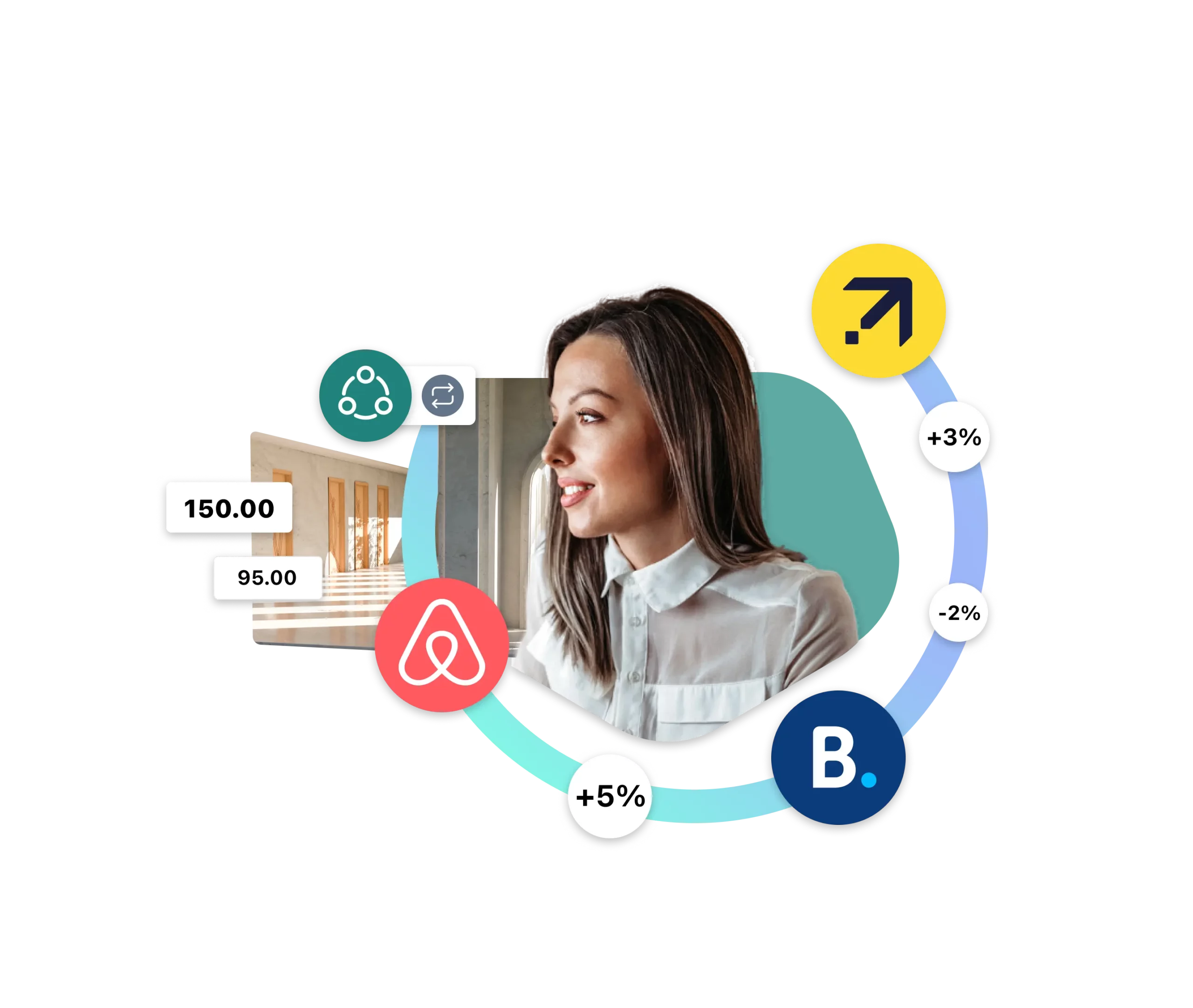
OTA integrations affect cost through both direct fees and operational consequences. Direct costs may include Channel Manager charges or premium connections, while indirect costs arise from errors, double-handling, rate mismatches, and avoidable overbookings. In the European hotel market, Booking.com and Expedia remain dominant OTA players, with Airbnb also relevant for certain accommodation types, so Irish properties need strong integration depth across these channels. The financial value lies in reliable synchronisation, not just in having logos on a pricing page.
11Is cloud hotel software better value than legacy or on-premise systems?
Cloud hotel software is usually better value when measured against flexibility, updates, accessibility, and integration readiness. Legacy or on-premise tools can appear cheaper if already installed, but they often create hidden cost through manual work, slower updates, weaker APIs, and limited remote access. For Irish hotels operating with lean teams, cloud software is generally the more resilient commercial model because it supports distributed access, faster deployment, and continuous product improvement without local infrastructure overhead.
12How important is implementation cost when comparing hotel software options?
Implementation cost is strategically important because it determines how quickly a system begins delivering value. Implementation usually includes account setup, configuration, migration, training, user adoption, and go-live support. A lower subscription price is less attractive if onboarding is slow or disruptive. Irish buyers should compare implementation as a business process, not a one-off fee, and ask how long migration takes, what internal resources are required, and whether trading continuity is protected during the switch.
13What does a good hotel software contract look like for an Irish buyer?
A good hotel software contract is clear on term, renewal, notice, data ownership, exit rights, and commercial scope. The important decision points are minimum commitment length, auto-renewal rules, support levels, SLA expectations, and what happens to guest and reservation data when the contract ends. For Irish buyers, the commercial detail should also show billing currency in euro, whether VAT is added separately, and which features or integrations can change price during the term.
14How does Irish VAT affect the evaluation of hotel software pricing?
Irish VAT affects software evaluation because it changes invoice reality and budgeting accuracy. Ireland’s standard VAT rate is 23%, so buyers should confirm whether quoted software prices are inclusive or exclusive of VAT before comparing suppliers. Hotels should also check whether the system can support tax handling across rooms, extras, and payments in a way that fits local accounting workflows. A pricing comparison is incomplete if VAT treatment is unclear or handled outside the software.
15Which payment methods should hotel software support for the Irish market?
The right payment mix for Ireland starts with euro-denominated card acceptance and should also support digital wallets, remote payment capture, refunds, and where relevant SEPA bank-based flows. Because Ireland operates within SEPA, euro credit transfers and direct debits form part of the wider payment environment, and instant euro payments are expanding further. For hotels, the commercial requirement is simple: payment options should reduce friction, support secure checkout, and reconcile cleanly with the PMS.
16Why do payment processing fees matter so much in hotel software pricing?
Payment processing fees matter because they scale with revenue and can quietly reshape total software cost. A platform with a modest subscription fee may become expensive if card-present, card-not-present, refund, or virtual card transactions carry layered charges. Irish accommodation providers should review gateway costs, acquiring logic, payout timing, chargeback handling, and PCI-related responsibilities. Payment pricing should be assessed as part of booking economics, not as a separate technical line item.
17How relevant are GDPR and Irish data-protection rules when choosing hotel software?
Data protection is a core buying criterion because hotel systems process guest identity data, payment-related information, stay history, and communications. In Ireland, GDPR applies and the Data Protection Commission is the national supervisory authority, with the Data Protection Act 2018 giving further effect in Irish law. Buyers should therefore check access controls, data-processing terms, security practices, retention support, and data-export capabilities. Low software cost is poor value if compliance risk becomes operational burden.
18What role does automation play in the value of hotel software pricing?
Automation is the conversion of repetitive hotel tasks into system-led workflows. In pricing terms, its value comes from labour savings, fewer errors, faster guest service, and more consistent rate and availability control. Irish hoteliers should assess whether automation covers channel updates, payment requests, guest messaging, housekeeping triggers, reporting, and routine admin. A system with weaker automation may appear cheaper, but the hidden operational cost of manual processes usually erodes that price advantage over time.
19How should hotels assess the ROI of hotel software?
ROI is the measurable business return created by the software relative to its cost. Hotels should calculate ROI using time saved, reduction in overbookings, stronger direct-booking conversion, improved rate control, faster payment collection, and lower dependence on manual admin. For Irish operators, the most reliable approach is to set a baseline before implementation and then review performance in euro across labour, occupancy mix, ADR, and distribution costs. Without baseline measurement, ROI claims remain too abstract for decision-making.
20How does revenue management affect hotel software pricing decisions?
Revenue management is the process of using demand signals, booking pace, restrictions, and pricing rules to improve revenue from available inventory. In software pricing, it often appears as a higher-tier feature or add-on because it requires forecasting logic and tighter automation. Irish hotels should treat revenue tools as commercially relevant when they can influence ADR, occupancy quality, and direct-booking strategy. The best pricing evaluation checks whether recommendations are actionable inside the operating system, not isolated in reports.
21How important is scalability for growing hotels and accommodation groups in Ireland?
Scalability is the ability of the software to support more rooms, more users, more reservations, and more properties without major operational disruption. For Irish hotel groups, aparthotels, and expanding guesthouse operators, scalability matters because a low-cost system can become restrictive when reporting, distribution, or permissions grow more complex. Buyers should ask how pricing changes across room bands, whether multi-property controls exist, and whether advanced integrations or APIs are limited to higher commercial tiers.
22Which integrations beyond PMS, Channel Manager, and Booking Engine matter most?
The most commercially relevant integrations beyond the core stack are payments, accounting, revenue tools, guest messaging, reporting, and operational apps tied to housekeeping or self-service. Their value lies in removing duplicate entry and improving decision speed. In Ireland, integrations should also fit euro-based payment flows, VAT-conscious accounting processes, and OTA-heavy distribution realities. A strong integration is one that shares useful data reliably in both operational and financial workflows, not one that simply claims compatibility.
23How can an Irish hotel compare two software offers fairly when the pricing models are different?
A fair comparison converts each offer into the same decision framework. Hotels should compare annual cost in euro, VAT treatment, implementation effort, payment-related fees, included modules, support levels, contract length, and the operational outcomes expected from automation and integrations. This is especially important when one supplier uses public subscription pricing and another uses quote-based or hybrid pricing. Like-for-like comparison is only possible when commercial structure and feature scope are normalised first.
24What should decision-makers ask during a hotel software demo if pricing is the main concern?
A pricing-focused demo should prove commercial clarity, not just feature breadth. Decision-makers should ask what is included in the quoted plan, what costs extra, how rates scale with room count, how OTA sync works, how payments are charged, what implementation involves, and what support is standard. For the Irish market, the demo should also reflect euro billing, VAT handling, GDPR-aware data processes, and realistic examples involving Booking.com, Expedia, and direct-booking workflows.
25What does RoomRaccoon’s pricing model suggest for hotels and guesthouses in Ireland?
RoomRaccoon’s Irish pricing page suggests a pay-per-room subscription model built around four package levels, with optional upgrades and a stated 20% saving on annual contracts. For hotels and guesthouses in Ireland, that points to a pricing structure designed around property size and feature depth rather than a purely opaque quote-first approach. The practical evaluation should still focus on implementation, included modules, euro-denominated budgeting, VAT visibility, and how the package supports direct bookings, OTA connectivity, automation, and growth.














 AI pricing — RaccoonRev Plus